As machine learning becomes an essential skill across multiple sectors, the real challenge is no longer just using it but knowing how to introduce and teach it in the classroom. Many educational institutions, especially those in more traditional fields or with lower levels of digitalization, show some reluctance to incorporate these technologies due to their apparent complexity. However, machine learning is a technology that will play a key role in the future careers of today’s students. For this reason, finding accessible, practical, and engaging ways to teach it has become essential for schools and educators looking to adapt to this new landscape.
A global survey conducted by the Digital Education Council found that 86% of students use AI in their studies, with 54% using it weekly and nearly one in four using it daily. This trend highlights how today’s students are already integrating these technologies into their learning habits, making classroom adoption smoother and more intuitive, as the students themselves are predisposed to using methodologies that make learning more interactive and easy to comprehend.
However, machine learning is not just a flashy trend, it’s a powerful educational tool with proven results. The versatility of machine learning platforms have proven highly effective, according to Heliyon, which analyzed 69 studies on personalized adaptive learning in higher education, 59% of them reported improvements in academic performance.
What is machine learning in education
In simple terms, machine learning is a technology complementary to artificial intelligence, where computers or machines learn patterns of correct usage from data and then use those patterns to analyze, make predictions, or make decisions.
Machine learning in education uses algorithms trained on data such as past student answers, grades, or engagement metrics. These systems continuously learn and refine their outputs over time, improving their accuracy as they are exposed to more examples. As GeeksforGeeks mentions, "Unlike traditional programming where instructions are fixed, ML allows models to adapt and improve through experience.”
In education, it is useful because it can personalize learning for each student, help teachers work more efficiently, and support better decisions at the classroom and institutional levels.
What are the benefits of machine learning in the classroom?
Machine learning platforms in education simplify the application of complex data analysis and predictive model training, often removing the need for traditional coding skills. TOKII takes this a step further by integrating digital twins and gamified layers that recreate real industrial scenarios. This approach contextualizes the data and allows students to visualize how it behaves, interact with it, and understand machine learning concepts in a more intuitive and engaging way.
The combination of these two powerful technologies provides several benefits for both students and educators:
Benefits of ML for students:
Personalized learning paths: One of TOKII’s main goals is to prevent learning gaps. Thus, the analysis and feedback board helps identify individual setbacks in order to adjust difficulty and content to match each student’s learning profile.
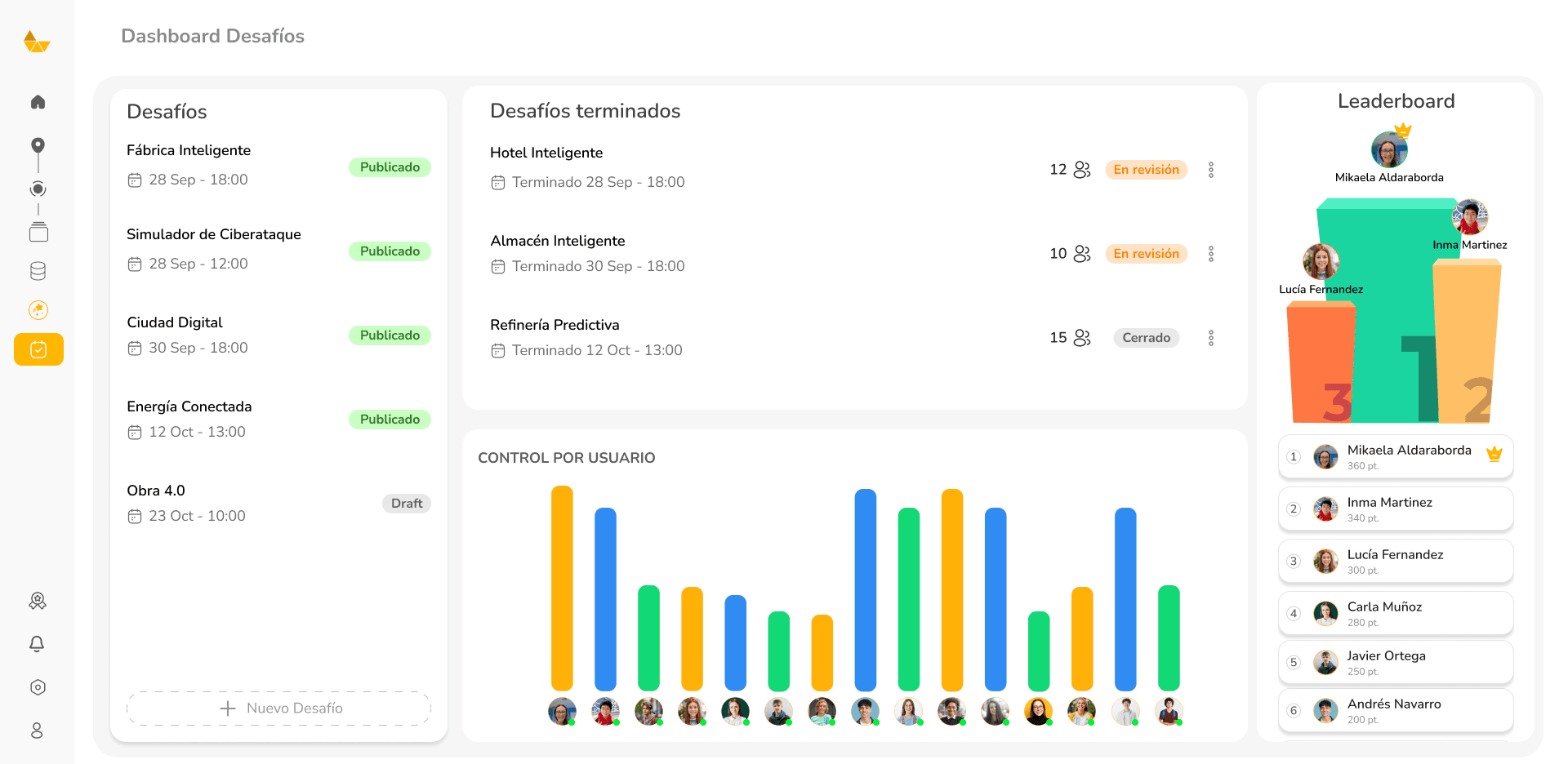
Progress visibility: Students can track their own progress through visual dashboards and continuous feedback loops, which help them reflect on their performance and stay motivated.
Gamified experiences: game dynamics are integrated to enhance student engagement, participation, and motivation. This approach makes learning more enjoyable, encourages experimentation in a risk-free environment, and fosters healthy competition with oneself through personal challenges and progress tracking
Real-life industrial simulations: Through digital twins, TOKII creates immersive, interactive learning environments that replicate real industrial settings. Students engage in hands-on learning by interacting with virtual machines that behave like real ones: they move, respond to inputs, and simulate failures. This allows them to observe real-time system behavior and understand the consequences of their actions in a risk-free space.
No-code ML training: Enables students to get started in AI and analytics with easy machine learning, creating predictive models without the barrier of programming.
Benefits of ML for educators:
Integration with LMS: TOKII integrates seamlessly with existing school systems, centralizing all relevant data for easy access, monitoring, and planning.
No-code interfaces: allow creating and training predictive models and creating ML activities without needing to write code.
Automated grading systems: Teachers receive instant evaluations of student performance for each activity, including scores and progression data, while also being able to provide immediate, personalized feedback.
Chat-based virtual assistant: The integration with an IA assistant helps automate repetitive tasks and even provides on-demand support for subject-specific queries.
Customizable challenges and ML exercises: With the no-code ML Lab, educators can design hands-on predictive analytics challenges adapted to different levels and learning objectives, from basic classification to advanced regression and clustering tasks.
This flexibility makes TOKII a suitable platform for a wide range of educational levels, from schools creating activities tailored to machine learning for kids to more advanced analytics projects for vocational training or university students.
TOKII bridges the gap between academic learning and real-world industry by bringing authentic, data-rich environments into the classroom. It has been adapted and gamified for the education sector, so it provides a real learning environment with real modules that are being applied in the industry.
As TOKII is constantly evolving to satisfy the needs of the customers and releasing features our customers have asked us to develop, the platform is always ensured to meet the industrial requirements.
Examples of Real use cases in Schools and educational centers
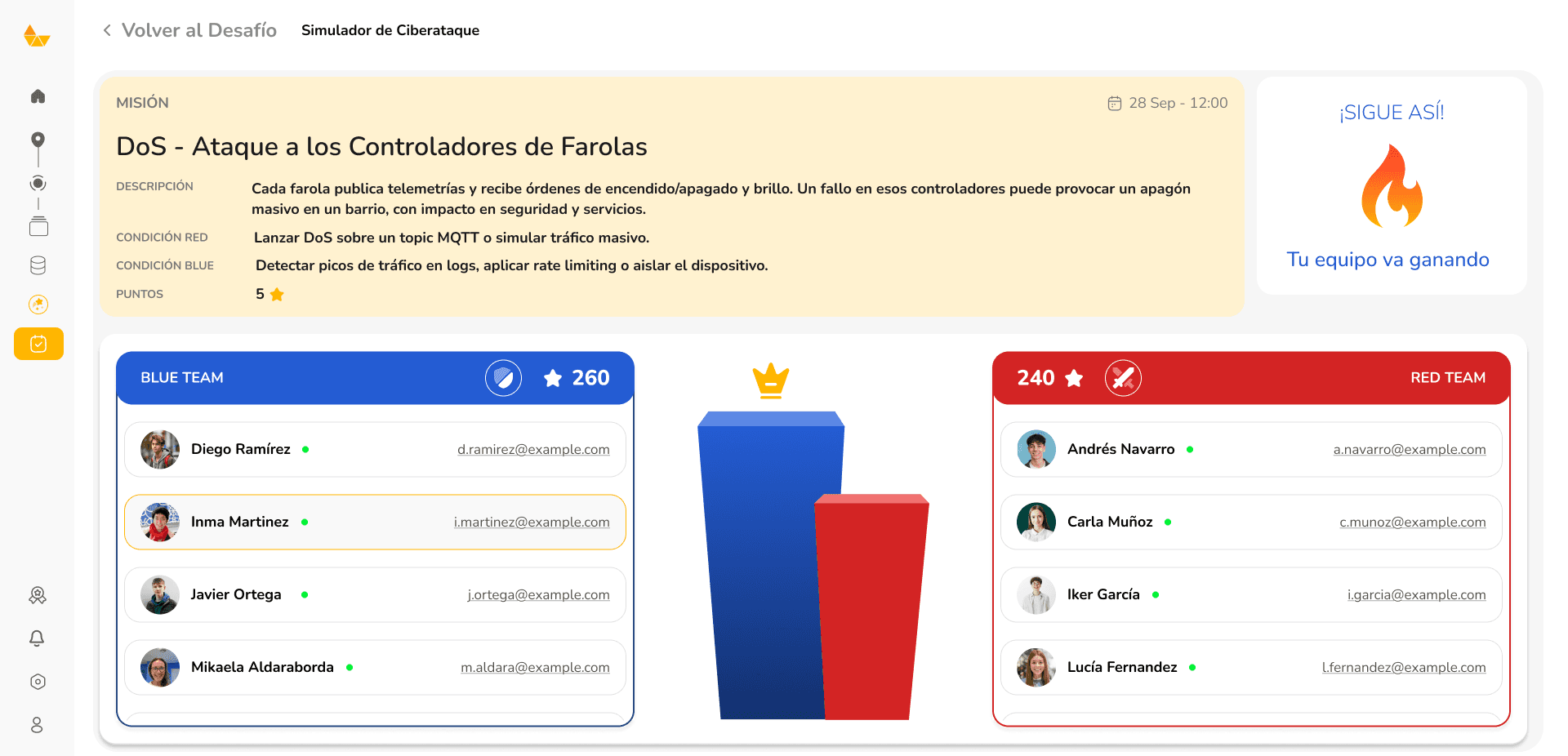
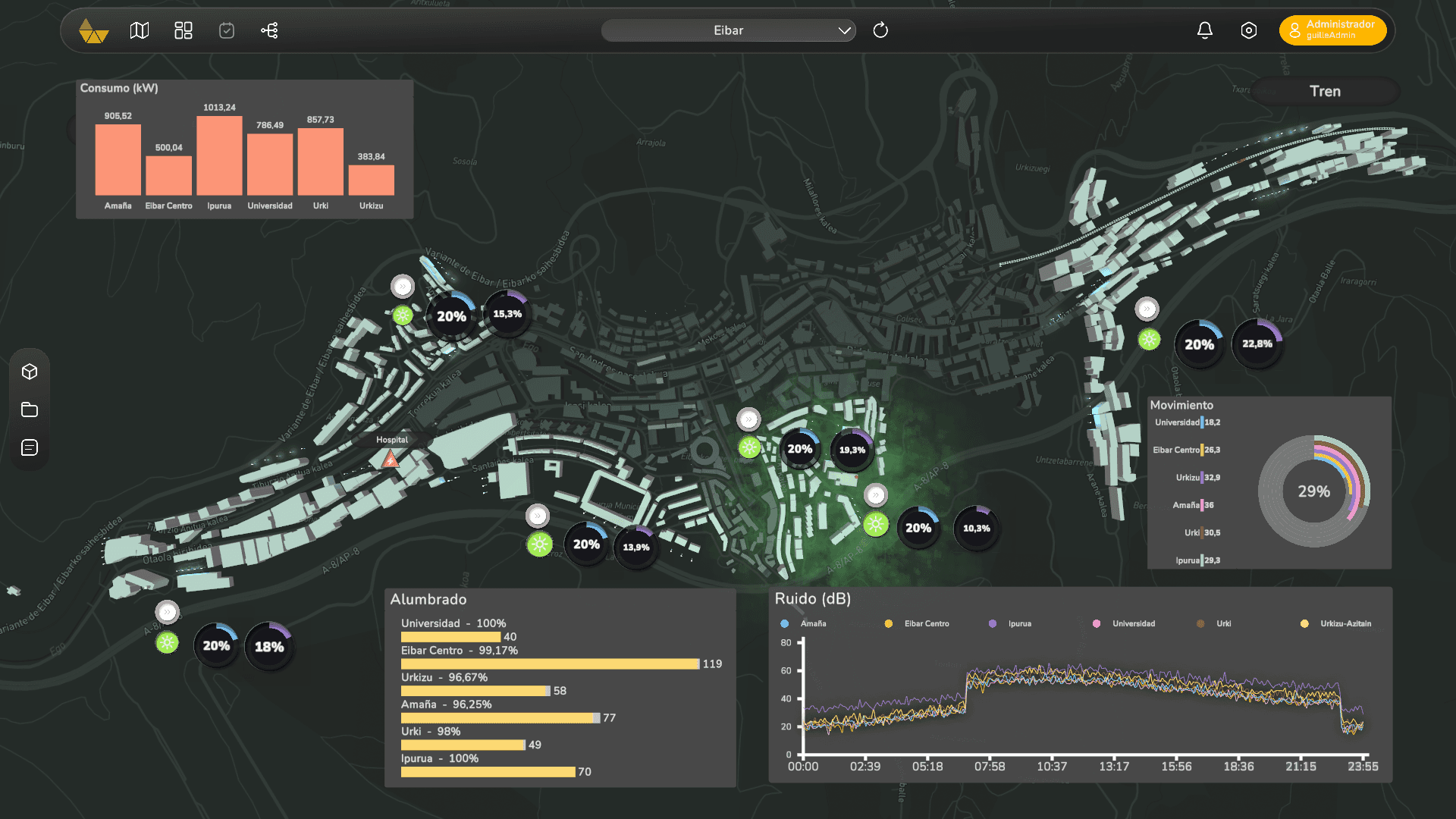
UniEibar: We have created a digital twin of the cities of Éibar and Ermua, including their urban infrastructure and energy, mobility, lighting, and transportation systems. TOKII receives real-time data via MQTT that is used to simulate potential cyberattacks and analyze their impact on the actual operation of urban services. This allows students to understand how digital threats affect critical systems and to practice identifying anomalies, interpreting alerts, and applying containment and recovery strategies.
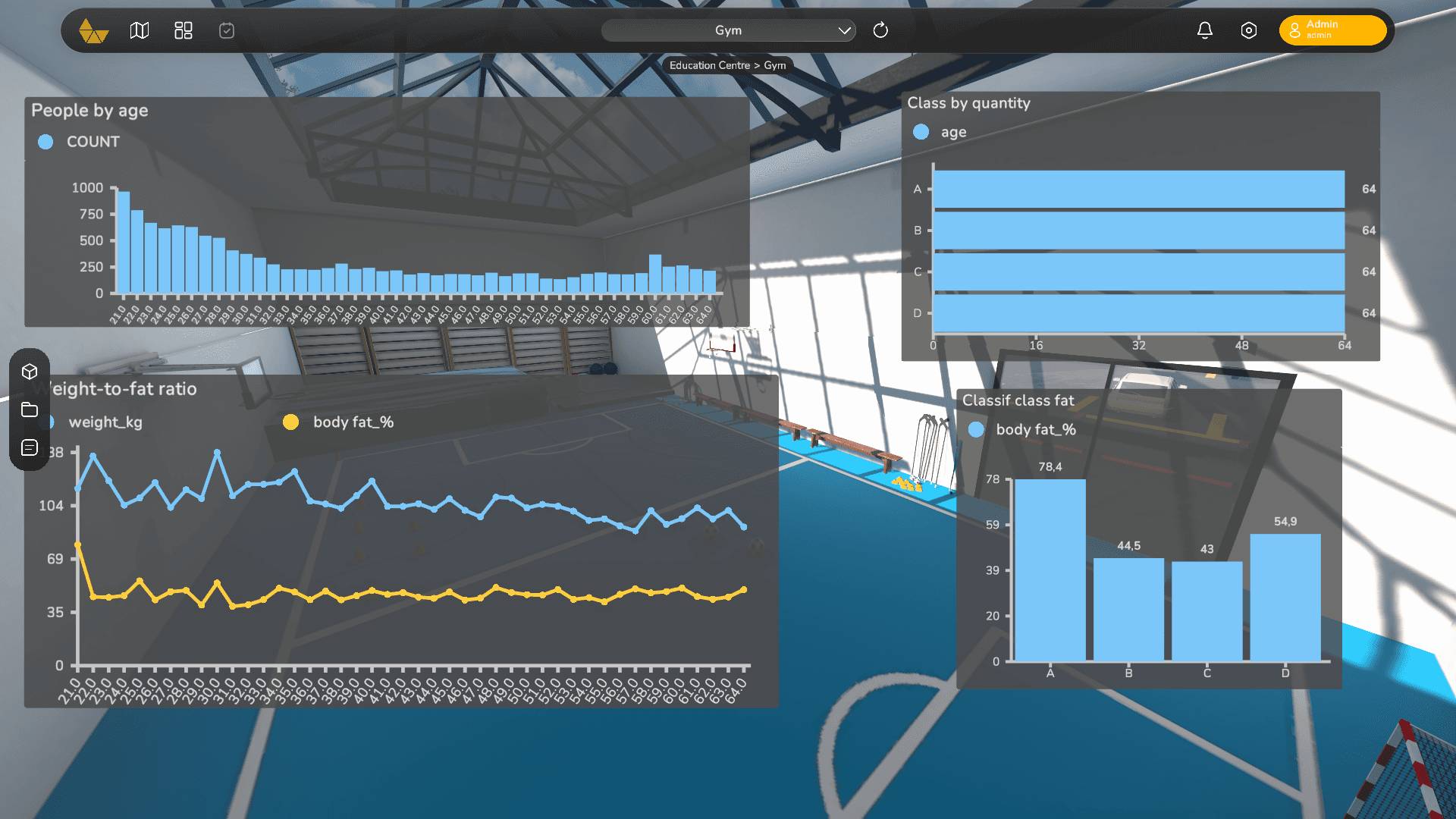
AT Global: In five specialized technology centers, students use TOKII to create predictive models applying machine learning without the need for programming. They apply machine learning in the context of sports, helping analyze performance data and optimize training strategies through data-driven simulations.
If you're an educator or institution looking to bring interactive teaching and learning methods into your classrooms, discover how TOKII can help you make it happen.
Request a personalized demo and let our team of experts guide you step by step in introducing easy machine learning projects for beginners, tailored to your students’ needs and your educational goals.